


The Flower Market in Kolkata
Atualizado: 7 de mai.

A slightly longer poem for my readers, concerning a complex issue of consciousness: belonging to another person while continuing to love.
May you find peace and enjoy the read!
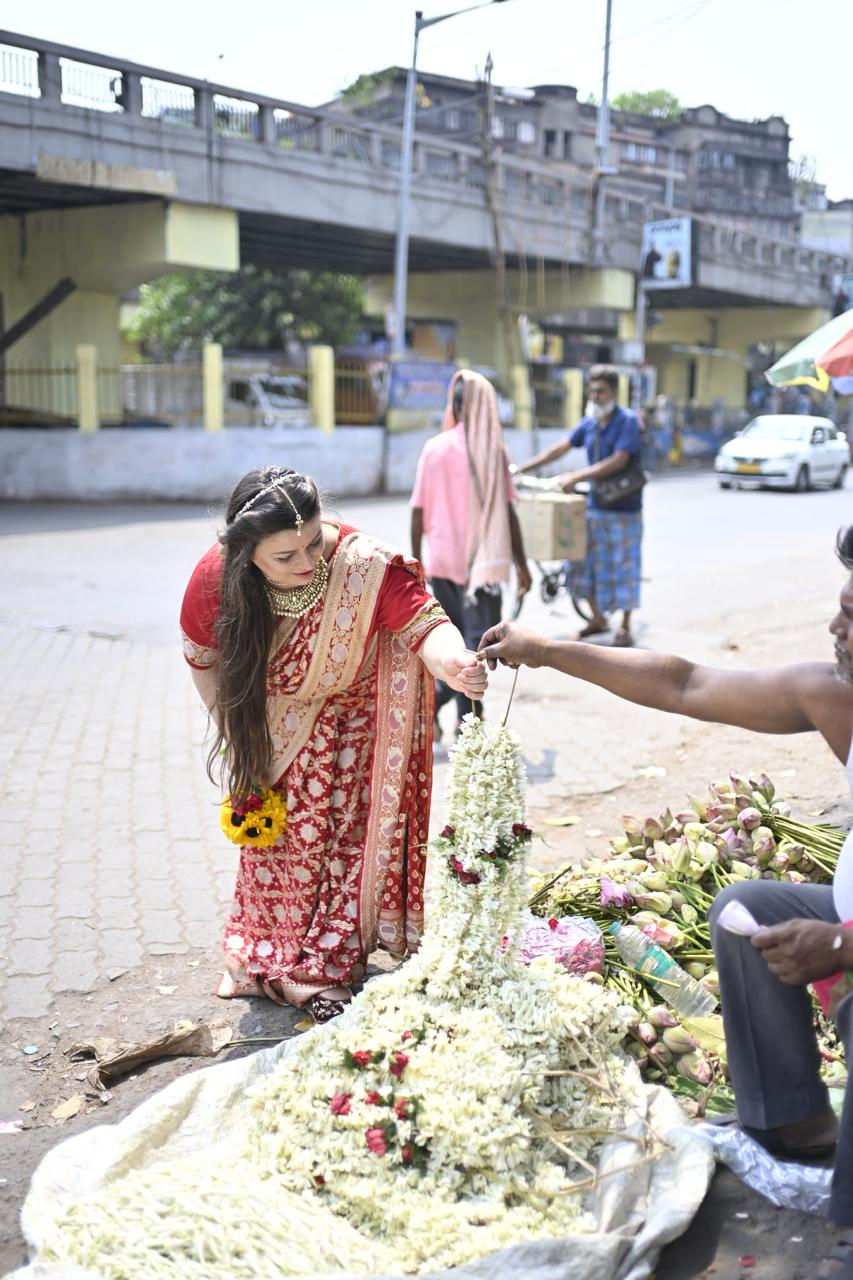
Many thanks to the Bengali poet Rabin Ghosh, Sonali e Rone Das for their friendship, company and for the pictures. 🤗
The Flower Market in Kolkata
Ana Paula Arendt*
Now there is a woman who would become a woman—what she is.
She longs to become herself without adversatives.
Yet she must overcome what she has been made:
to be for a man.
Otherwise she risks dissolving—
not enough for him, not enough for herself.
Belonging, and not dissolving.
She is a poet, and she walks away from war:
one man sharpening words against another,
millions leaning in to hear the threat—
crowds bending close
to hear the blade of hatred pass.

Yet what she wants—more than anything—
is what every woman wants:
to make a man happy,
and be the place where his day falls quiet;
to keep him from breaking,
and be the one in whom he finds himself again.
So she walks toward the market,
where devotion is available in flowers–
for each god, a blossom,
for each flower, a name.
Color everywhere.
Brightness gathered in rows,
laid out at a gentle price.
A vivid paradise.
Wet earth beneath her steps…
Is there power in this longing?
Is there possession?

Still, there is more sweetness than sorrow,
for the world is not ours to command.
And yet—her man must be hers,
so that nothing in her remains ungiven.
Lotus and marigold, red hibiscus,
red roses,
jasmine, parijatas, sunflowers—
garlands of madar waiting
for a wrist, a throat, a vow.
Flowers speak—
without needing words.
They do not argue.

Each Indian god has a chosen flower
to be their sacred blossoms in unseen gardens,
a pure presence of fragrance and form.
Yet between what she gives
and what remains hers
there stretches a distance.
This is the miracle required:
from chasm between land and river,
a paper boat undone in water,
her heart—
a small, broken toy in men’s hands,
a heart ground into sand.
The river sees otherwise than the land.
The river must run.
The land would gather and keep.
And still the waters run and are kept.

So much conflict in the world—
yet river and land together sustain
trees, bushes, flowers, boats:
one forever seeking the sea,
the other holding it
in a living balance.
And sometimes in life
there is only land.

Then one must choose:
abandon oneself,
to accept what is,
or remake the visible
until desire can live there again.
On the inside,
a word stirs—love—
and suddenly
reasons break out everywhere,
arranged in baskets of flowers:
a votive learning
of what matters most.
Memories run through the heart
as the Ganges through Kolkata.
A market sets its prices—
conditions always shifting.
And yet these flowers stand in contrast:
for what we seek most in life
is non-negotiable.
There, in Kolkata, a market
of flowers for sacred devotion—
a place where no bargaining holds.


On the outside,
the market hums
like a throat about to confess;
garlands breathe
against the wrist like thought.
The sunflowers in the hand,
unread, unneeded by the Sun,
following light to match
the most luminous, finely wrought words—
the old, familiar rhymes
poets have always given.
Along the banks of the Ganges,
couples stand within their weddings,
bright, willingly unknowing of what will come,
already forgiving what will wound them,
already forgetting what will make of life a labor.
They know—and still
they stand inside a happiness
they do not question.
There: the flower market—
a place that unsettles the ordinary world,
a space where one becomes special,
more special than all others.


After giving oneself to another,
there is no return.
One cannot take oneself back.
Now one life rests inside another—
and mistakes can no longer end
in mere disappointment.
Everything must be invented again.
Fresh flowers must be chosen—
the quiet gods behind the sellers,
with work-worn, cracked hands
holding prices steady,
raising always a better offer,
making of the world a white road to travel,
a softening place for the coming of sleep.
Rivalry will come—
perhaps carried away by the river.
Old wounds will rise—
perhaps from hidden crevices,
offering small and delicate blooms.
Opposition does not make sense
in a market of flowers.
And yet—
to surrender the control of one’s life to another
remains almost impossible.
Love must happen.
And yet—it may not.
Failure darkens the water.
Life has no final conflict—
only uncertainty.
Is love taking place?
So many flowers
yet never finding for you
one wholly unlike the rest.
All charm, all beauty,
returns to form.
The sorrow of not belonging—
and still, the refusal
to abandon what does not work.
Each wound in me
a quiet whisper
in the act of choosing.
The Hindu gods and goddesses
must borrow from the universe
just enough creative force
to let their beauty remain unchanged.
Then I was given there
free flowers from those toiling hands.
Flowers never being enough,
only becoming more of the same
that you already have.
Usual thoughts and feelings
disappear by remaining the same.
But goodness needs nothing!
It simply stands.*
It is enough.
Yes, those flowers have withered—
yet in the poet’s eyes
they open more beautifully than ever.
Flowers, virtues—
a goodness without strength
shall always lose, shall always perish.
Then selflessness returns.
Then the world opens.
From nothing left,
everything newly made.
There are countless flowers in that market—
none so different from the others.
But those I held,
those that perished,
are the only ones that remained for you,
with every wound in my heart.
Beyond possession—
remaining,
and giving you all the flowers.
Less healed
in the victorious, secret bliss of a
sacred devotion
than in the yearning to love you…
Never achieving to tell you of it,
words became so intense
that they could not be spoken.
All poetry became useless—
just flowers offered
to create the world.
Love—
it endured and blossomed
as that market of no bargains,
where a free flower
lends all her beauty
to our shining eyes.
Love,
a water
in which all flowers live.
*Toni Morrison.

*Ana Paula Arendt, pen name of R. P. Alencar, is a Brazilian poet and diplomat posted in India.
Comentários